Portable Infrared Saunas
Portable Infrared Saunas: The Head-Out Tents, Explained and Ranked
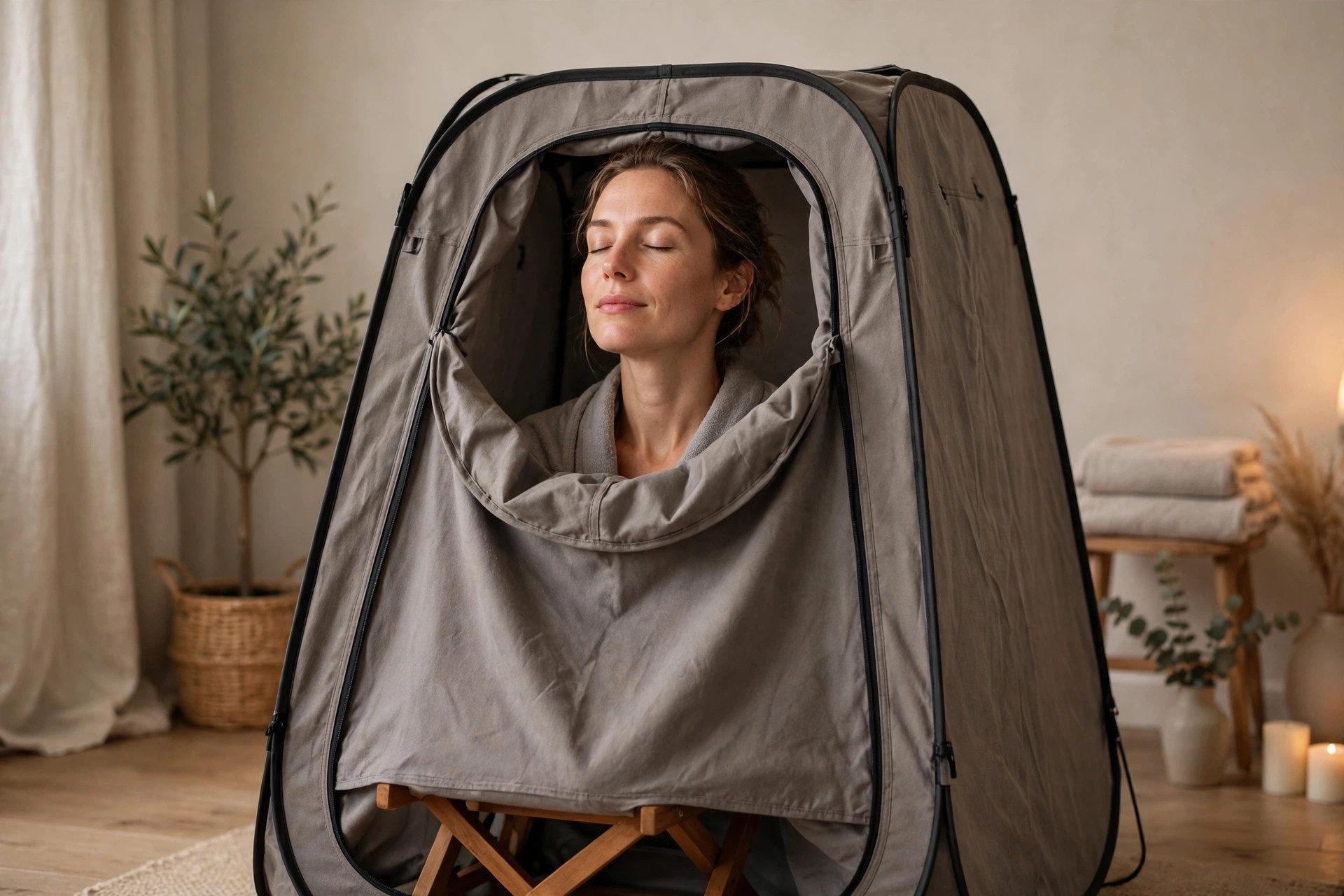
A portable infrared sauna looks, at first glance, like a small camping tent with a chair inside and a hole at the top for your head. That odd shape is the whole idea. You sit inside a fabric enclosure lined with infrared panels, zip it up to your neck, and let the panels warm your body directly while your head stays out in the cooler room air. This page explains how that actually works, what the temperature numbers on the box really mean, and how the main models stack up — from a budget tent that costs about as much as a nice dinner out to premium units that cost more than many wooden cabins.
On this page
How a head-out infrared sauna works
A traditional sauna heats the air in a room, and the hot air then heats you. An infrared tent works the other way around. The fabric walls of the enclosure are fitted with flat radiant panels — most budget and mid-range models use carbon panels, while the premium Relax Sauna uses semiconductor far-infrared emitters. When the unit is switched on, those panels emit infrared energy, a form of radiant heat. Radiant heat travels in a straight line and warms the surfaces it lands on — in this case, your skin and the chair and foot pad around you — rather than warming the air first.
That is why the enclosure can be made of fabric instead of wood, why it can fold flat for storage, and why it can run from an ordinary household outlet. There is no heavy heater trying to bring a whole room up to temperature. The panels warm the person, the small amount of air trapped inside the tent warms up as a side effect, and the insulated fabric slows heat escaping. Most models add a heated foot pad, a handheld controller for temperature and timer settings, and a folding camp-style chair. Setup is usually a matter of unfolding the tent, placing the chair, and plugging in.
Why your head stays out
The head-out design is not a cost-cutting accident; it is the feature most owners say they value. Because the panels are heating your body directly, your head does not need to be inside the hot zone for the session to feel complete. Keeping your head out means you breathe ordinary room air for the whole session, which many people find far more comfortable than breathing very hot air. It also means you can read, watch something, or talk to someone in the room, and your hair stays dry. The trade-off is honest and worth stating plainly: your neck and head are not inside the heated space, some warmth escapes around the neck opening, and the experience is a body-warming session — not the full-body hot-air immersion of a traditional sauna room.
Air temperature vs. body heating — the number that confuses everyone
Every model on this page advertises a temperature range, and those numbers need careful reading. On an infrared tent, the figure on the controller is a panel setting — the level the panels are driven at — not a promise that the air inside the tent reaches that temperature. The air inside a head-out tent typically stays noticeably cooler than the panel setting suggests, because the enclosure is fabric, the top is open around your neck, and the design was never trying to heat air in the first place. You can still feel properly warm, and most people sweat, because the radiant energy is landing on your body directly.
So compare models on the right things: the published panel setting range, the power draw, the panel coverage, and how the unit is built — not on a single headline number. A tent advertising a higher maximum setting is not automatically a hotter experience than a well-built tent with a lower one. And no portable infrared tent should be compared, degree for degree, with a traditional Finnish sauna: that is a different kind of heat, delivered a different way. For the full picture of how the formats differ, see how portable saunas work, and for our overall rankings across every format, see the best portable saunas flagship guide.
The picks, ranked
The ladder below runs from the cheapest sensible starting point to the premium end. Each step up buys you something specific — a wider temperature range, better panel coverage, a longer warranty, or a different emitter technology — and we name what each step does not buy you, too. Prices are November 2026 research figures; they change, and the seller's page wins.
SereneLife Portable Infrared Sauna
The SereneLife is the default budget recommendation in this category, and it has been for a while: it is the portable infrared tent most often recommended in roundups, with 6,000+ Amazon reviews noted by the Porch & Fire roundup. At roughly $110 to $203 depending on the retailer and the promotion running that week, it is the cheapest credible way to find out whether the head-out format suits you before spending more. You get the standard package for this tier — a foldable tent, panels, a chair, and a controller — in a unit that packs away when you are done.
What we like
- Lowest sensible entry price in the category
- A very large base of owner reports to learn from
- Folds away — no permanent footprint in the room
Downsides
- Basic build and chair, as expected at this price
- Prices swing widely between retailers — compare before buying
Durasage Portable Infrared Sauna
The Durasage sits a clear step above the budget shelf. Its published figures are easy to work with: 900 watts of power and panel settings from 104 to 140°F, sold at $329.95 at dealer retail, though other listings vary. That lower starting setting matters more than it might sound — a gentler floor makes the tent easier to settle into if you prefer to start mild and build up, and it makes shorter, lower sessions simpler to run consistently. For buyers who have decided the format suits them and want something a notch sturdier than the cheapest tent, this is the natural middle rung.
What we like
- Published 900W power and a wide 104–140°F setting range
- A low starting setting for gentler sessions
Downsides
- Pricing varies between dealers — the $329.95 figure is dealer retail, not a fixed street price
- Still a fabric head-out tent, with the same neck-opening heat escape as the rest of the format
HeatWave Rejuvinator (Radiant Saunas)
The HeatWave Rejuvinator, from Radiant Saunas, is priced close to the Durasage at $349.99 but advertises panel settings up to 150°F — the highest maximum setting among the budget and mid-range tents on this page. Remember what that number is: a panel setting, not an air temperature. Read honestly, it means the Rejuvinator gives you more headroom at the top of its range if you like your sessions driven harder, in the same familiar head-out tent format. It is a reasonable alternative to the Durasage rather than a leap beyond it, and the choice between the two comes down to whether you value the Durasage's lower starting setting or the Rejuvinator's higher ceiling.
What we like
- Highest advertised panel setting in this price band, up to 150°F
- Established sauna brand (Radiant Saunas) behind it
Downsides
- The 150°F figure is a panel setting — do not read it as the air temperature inside the tent
We could not verify a canonical brand product page for the Rejuvinator, so we mention it here without a buy link rather than guess at one.
TheraSage Thera360 Plus
The jump from roughly $350 to $1,428 is the biggest on this page, and the Thera360 Plus has to justify it. What the money buys, on the published specifications: full-spectrum infrared — near, mid, and far — rather than far-infrared only, dedicated red-light panels, the widest setting range here at 100–170°F, a design that folds flat for storage, and a 2-year warranty, the longest on this page. It is the reviewers' "best portable" pick at BestSaunas.us. One caveat deserves bold type rather than a footnote: the included chair carries a limit of 180 lb, which will rule this unit out for some buyers outright — check it before anything else. Our full assessment is in the TheraSage Thera360 review.
What we like
- Full-spectrum infrared plus red-light panels
- Widest setting range here: 100–170°F
- Folds flat; 2-year warranty
Downsides
- Included chair limit is 180 lb — a real restriction, not a footnote
- Costs roughly four to ten times the budget tents
Relax Sauna
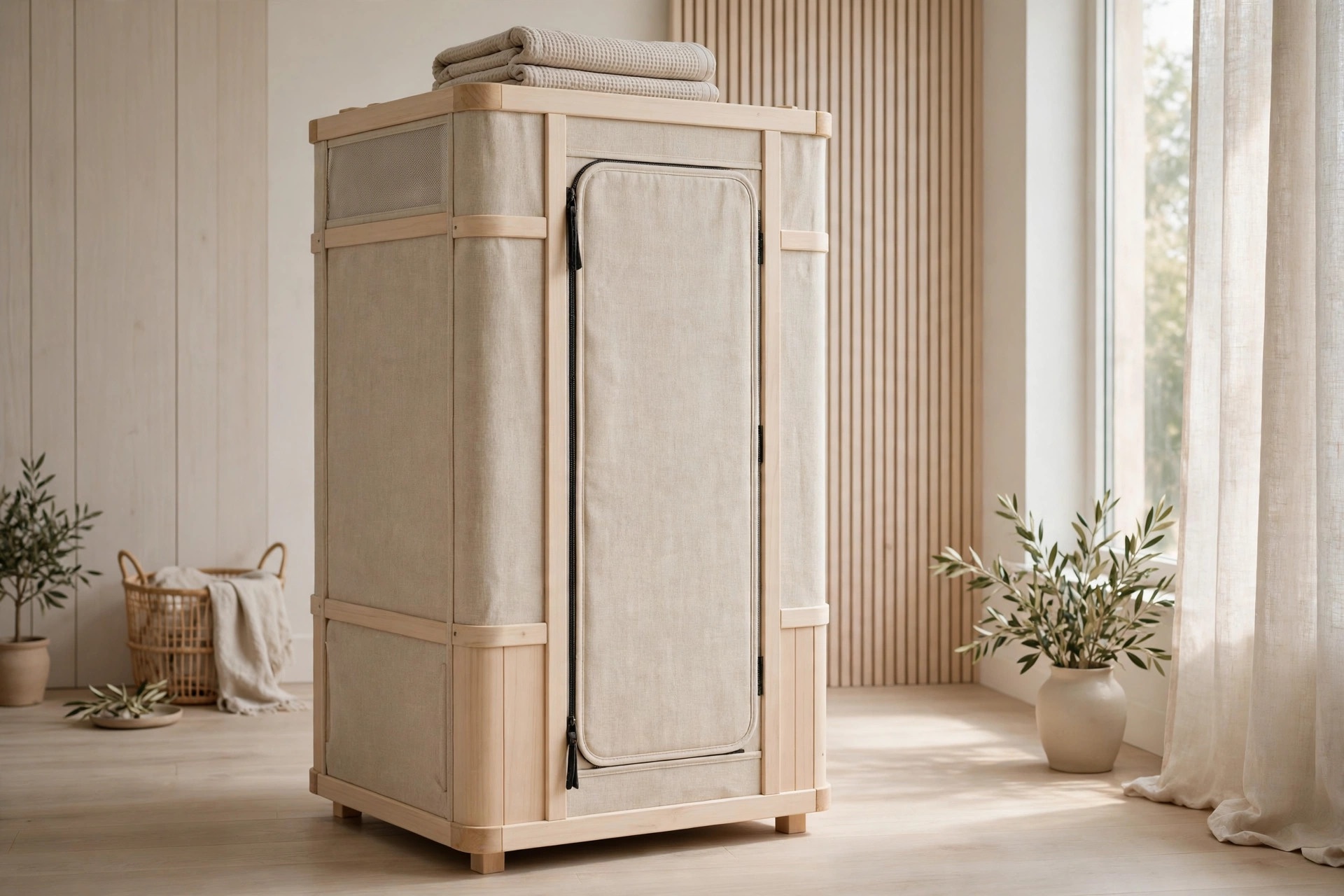
The Relax Sauna, from $1,700, takes a different technical approach from every carbon-panel tent above it: instead of panels, it uses semiconductor far-infrared emitters, a design that has made it a long-running favorite in practitioner channels. It is the connoisseur's end of the head-out category — the unit people arrive at after deciding the format is a permanent part of their routine and wanting the emitter technology built specifically for it. Whether that difference is worth the premium over the Thera360 Plus is the subject of our dedicated Relax Sauna review, which works through the published evidence in detail.
What we like
- Semiconductor far-infrared emitters — a genuinely different technology from carbon panels
- A long track record in practitioner channels
Downsides
- The most expensive route into the head-out format, from $1,700
- Far-infrared only — no full-spectrum or red-light panels like the Thera360 Plus
Spec table
| Model | Price (Nov 2026) | Temperature / settings | Power | Warranty | Watch out for |
|---|---|---|---|---|---|
| SereneLife Portable Infrared | ~$110–$203 | Not stated in our research | Not stated in our research | Not stated in our research | Prices swing widely by retailer |
| Durasage | $329.95 | 104–140°F panel settings | 900W | Not stated in our research | Dealer pricing varies |
| HeatWave Rejuvinator | $349.99 | Up to 150°F panel setting | Not stated in our research | Not stated in our research | Top figure is a panel setting, not air temperature |
| VEVOR 2-Person Infrared Tent | $299.90 | See the wider shelf, below | Not stated in our research | Not stated in our research | Retail listing — check the exact spec on the seller's page |
| TheraSage Thera360 Plus | $1,428 | 100–170°F | Not stated in our research | 2 years | Included chair limit: 180 lb |
| Relax Sauna | From $1,700 | See our full review | Not stated in our research | Not stated in our research | Premium price; far-infrared only |
Where a cell says "not stated in our research," the figure was not in the published material we verified — we leave it blank rather than fill it in from a listing we could not confirm. The seller's page is the final word on every figure here.
EMF, honestly
EMF — electromagnetic fields — comes up in almost every conversation about infrared panels, because the panels are electrical devices you sit very close to. Here is the honest position. Published EMF figures vary by brand, by model, and by how and where the measurement was taken, which makes tidy side-by-side comparisons unreliable. Some brands publish a number for a specific model; many do not publish one at all. What we will not do is repeat claims that a powered panel produces no EMF at all — no powered heating panel is literally at zero, and any marketing that says otherwise should be read with care. Our advice is simple: before buying, check the maker's published specification for the exact model you are considering, and if no figure is published, ask the maker directly and weigh the answer — or the absence of one — in your decision.
The wider shelf: a two-person option
Almost everything above seats one person. If you want a two-person infrared tent, the most visible option in our research is the VEVOR 2-person infrared tent, listed at $299.90 at Target — a wider enclosure with seating for two at a mid-range price. Two-person tents need more floor space, take longer to feel fully warm, and are less of a fold-away-and-forget purchase than the one-person models, but for couples who would rather sit together than take turns, it is the shelf to look at. As with every retail listing, confirm the current price and specification on the seller's page before buying.
Who this format suits — and who it does not
A head-out infrared tent suits renters and apartment dwellers (no installation, ordinary outlet, folds away), people who dislike breathing very hot air, and anyone who wants a warm, quiet daily ritual without giving up a room to it. It is a poor fit if what you actually want is the intense hot-air experience of a traditional sauna — for that, the only portable format that reaches true Finnish temperatures is the wood-fired tent covered in our Sweat Tent review. It is also worth comparing against the other humid option: a portable steam sauna heats with steam rather than panels, feels very different, and costs less at the entry end. And if floor space is the binding constraint, a sauna blanket packs smaller still.
A note on how we talk about benefits: you will see portable saunas marketed elsewhere with sweeping promises. We don't repeat detox claims — the evidence doesn't support them — and the same goes for calorie-burning promises and condition claims. What these tents honestly offer is warmth, comfort, relaxation, and a ritual many owners genuinely look forward to. Start with short sessions, drink water, and step out if you feel unwell. If you are pregnant, have a condition, or take medication, ask a doctor before using any sauna. Nothing on this page is medical advice. Some buyers also ask about HSA/FSA — a sauna may be eligible under some plans, so check your plan before counting on it.
Questions
Does a head-out infrared sauna feel like a real sauna?
It feels warm and relaxing, and most people sweat, but it is a different sensation: radiant panels warm your body while the air — and your head — stay comparatively cool. If you judge it as its own thing, it works well; if you expect the hot-air immersion of a Finnish sauna room, it will feel mild by comparison.
Why do the temperature numbers differ so much between models?
Because they are panel settings, not air temperatures, and brands set their ranges differently. The Durasage runs 104–140°F, the Rejuvinator advertises up to 150°F, and the Thera360 Plus spans 100–170°F. Compare ranges alongside power, panel coverage, and build — not as a simple hotter-is-better ladder.
Which should a first-time buyer choose?
For most people, the SereneLife at roughly $110–$203: it is the cheapest sensible way to learn whether the format fits your routine. Move up the ladder when you know it does — the Durasage or Rejuvinator for a sturdier mid-range tent, the Thera360 Plus or Relax Sauna at the premium end. Our flagship guide compares these against steam tents and blankets if you are still choosing a format.