Comparison · Formats Head-to-Head
Portable Sauna vs. Sauna Blanket: Four Formats, Compared Without the Marketing

"Portable sauna" covers four genuinely different products: a steam tent, an infrared tent, a wood-fired outdoor tent, and a heated blanket you zip yourself into. They differ in the kind of heat, the posture you hold, the space they take, and what they cost to buy and run. This page puts them side by side, gives a straight verdict for the most common situations, and then answers the neighbouring question — how any of them compares with a wooden cabin sauna.
The full comparison table
One warning before the table, because it decides how honestly you can read it: the blanket's temperature figures are surface temperatures inside the wrap, while the tents' figures are air temperatures in the space you sit in. They share a unit and nothing else. Our sauna blanket guide explains that distinction in full; it is flagged in the table so the numbers are never lined up as if they were the same measurement.
| Steam tent | Infrared tent | Wood-fired tent | Sauna blanket | |
|---|---|---|---|---|
| Format experience | Sit inside a small tent filled with warm, humid air; head inside the steam | Sit on a chair inside a head-out tent; your body is warmed, your head stays in room air | Sit on a bench in a real hot room outdoors; dry heat, with water on stones if you want steam | Lie down zipped inside a heated wrap on a bed, sofa, or floor; head outside |
| Real heat | About 115–140°F air temperature in practice, at effectively full humidity | Warmth delivered by panels rather than hot air; published panel settings on common models run roughly 104–150°F depending on the unit | 180–220°F air temperature — the only portable format that reaches true Finnish sauna heat | Quoted figures are surface temperatures inside the wrap, not air temperatures; the highest-marketed model here quotes 185°F surface |
| Space & storage | Needs a corner while assembled; packs down, but the steamer unit is a bulky extra piece | Needs a corner while assembled; most fold or collapse flatter than a steam setup | Outdoors only; the tent packs into bags, but it is a yard commitment while up | Smallest of all: folds to a bag that fits a closet shelf or under a bed |
| Setup time | Around 10 minutes to assemble and fill on a typical model, plus time for steam to build | Minutes to unfold and plug in; warmth builds gradually after switch-on | The tent itself goes up in roughly a quarter of an hour, then the stove must be lit and the tent brought up to temperature | Fastest of all: unroll, plug in, climb in — a couple of minutes |
| Price range | Roughly $100–$500, from white-label tents to the best-known branded steamers | Roughly $110–$600 for head-out tents, with premium portable infrared units running well above that | $1,499 for the complete SweatTent kit — tent, stove, stones, and bench | $69.99–$699, from budget wraps to the premium shelf |
| Running cost | Electricity for the steamer, plus water; a modest household load per session | Electricity for the panels; a modest household load per session | No electricity at all — the running cost is firewood and your time tending the fire | Electricity for the wrap; the smallest electrical load of the four |
| Best for | The warm, humid, enveloped feeling at the lowest tent prices | A calm daily sit-down routine indoors, head out, at moderate temperatures | Heat purists who want the real sauna experience and have outdoor space | Small homes, small budgets, travel, and a solo lie-down ritual |
| Watch out for | Leaks, and mold if the tent is packed away damp — drying it out is part of ownership | It will never feel like a hot-air sauna; check chair size and any stated chair limits on premium units | Outdoor only, weather and fire management, and the highest buy-in of the four | Zipper and controller complaints on budget models, one-size fit limits, and no sitting up or sharing |
Price ranges are November 2026 research figures; the seller's page is the final word. Temperature framing follows our fact-checked ranges for each format — see how portable saunas work for the heat-transfer background.
The heat question, format by format
Most format confusion comes down to one mistake: reading every temperature number as if it were the same kind of number. A steam tent heats air and fills it with moisture, so a session at 130°F feels enveloping and intense in a way the figure alone does not convey — humid air transfers heat to skin very effectively. An infrared tent works differently: panels warm your body directly while the air around you stays comparatively mild, and on head-out models your head is not in the heated space at all, which many people find makes longer, calmer sessions easier. A wood-fired tent is the traditional arrangement — a stove heats the air itself to 180–220°F, and you can ladle water over hot stones for a burst of steam. A blanket, finally, heats a surface in close contact around your body; its quoted figures describe that surface, and the experience is a concentrated, cocooned warmth rather than a hot room.
None of these is the "real" one except in the narrow sense that only the wood-fired format reproduces the hot-air conditions of a Finnish sauna. The better question is which sensation you will actually enjoy several times a week: humid envelopment, gentle direct warmth with your head in cool room air, fierce dry heat outdoors, or a warm wrap in bed. People keep the routine they enjoy. Our flagship guide to the best portable saunas ranks specific models inside each of these formats once you have picked a lane.
Verdicts by use case
If you want the closest thing to a real sauna → the wood-fired tent
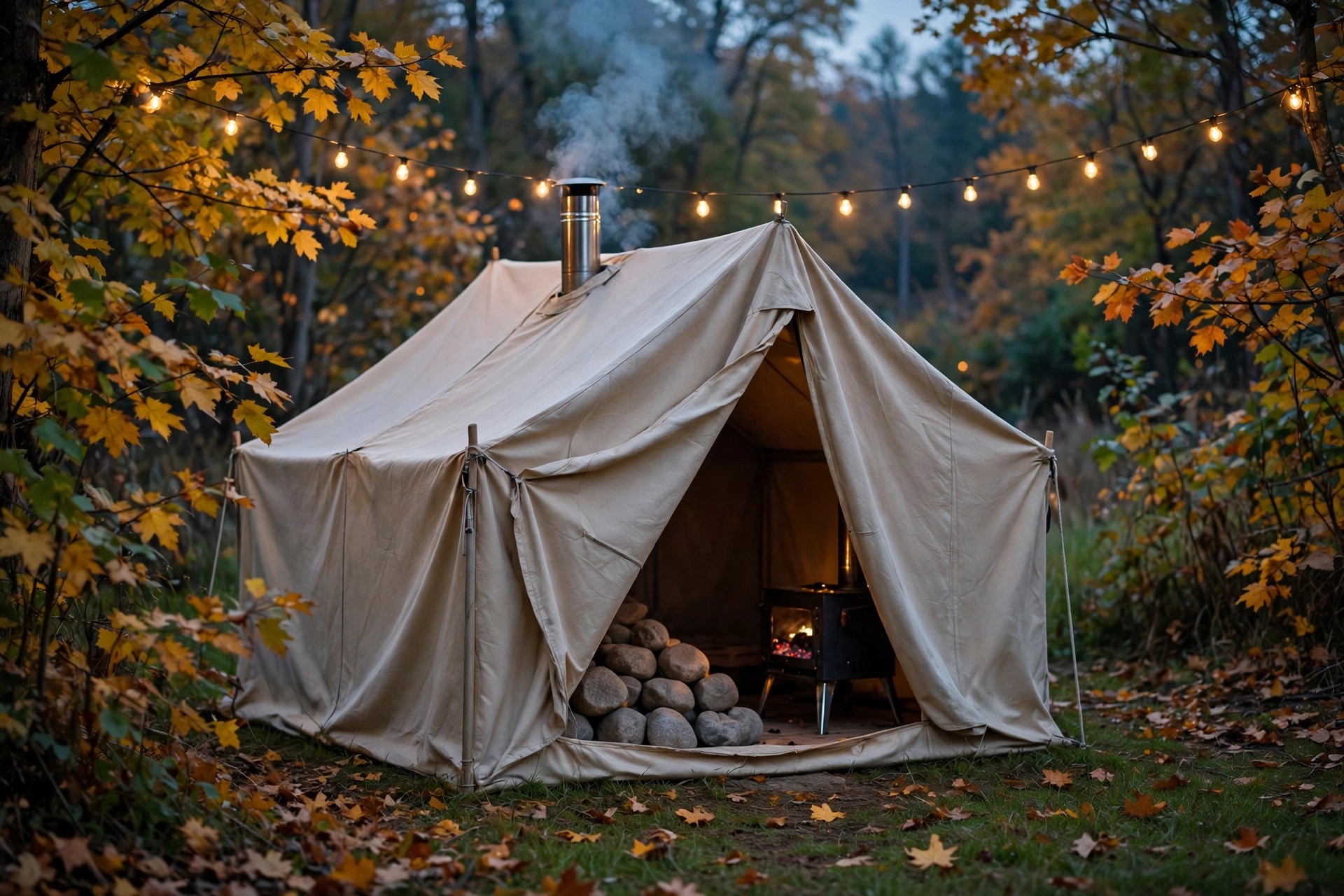
This one is not close. The SweatTent reaches 180–220°F — genuine Finnish sauna air temperatures that no electric tent and no blanket matches, because the others are not heating a room full of air to that level at all. You get a bench, dry heat, and stones you can pour water over. The trade-offs are equally real: it lives outdoors, it runs on firewood you light and tend, and at $1,499 for the complete kit it costs more than most electric options. If authentic heat is the point, it is the only portable answer. You can check the SweatTent kit on the maker's site.
If you want daily post-workout warmth at home → the infrared tent
For a repeatable indoor routine — come home, sit down, warm up, get on with your evening — the head-out infrared tent is the most liveable format. You sit upright on a chair, your head stays in ordinary room air, there is no water to fill or empty, and sessions are easy to start and stop. The models and the ladder from budget to premium are covered on our portable infrared sauna page. Choose this if the routine matters more than maximum heat.
If you have the smallest budget and the least storage → the blanket
Nothing else comes close on either axis. Blankets start at $69.99 on the budget shelf, our top-ranked pick sits under $300, and even the premium shelf tops out at $699 — and the whole product folds into a bag. If your home has no spare corner and your budget has no spare thousands, the blanket is not a compromise so much as the only format that fits your life. Just buy it with the surface-temperature rule in mind, and read the durability cautions in our blanket guide before choosing the very cheapest option.
If you are renting, or have no outdoor space → a steam or infrared tent
Renting rules out the wood-fired tent (outdoors, open fire) and, as the next section explains, any cabin. What remains is the plug-in pair. Pick the steam tent if you want the humid, enveloped feeling and are willing to dry the tent out properly after sessions; pick the infrared tent if you want the lowest-fuss daily routine and prefer your head out in room air. Both assemble without tools or alterations to the room, run from ordinary outlets, and pack away when a landlord, a move, or a change of mind requires it — which is precisely what renting demands.
The one-sentence version
Real heat: wood-fired. Daily routine: infrared tent. Humidity on a budget: steam tent. Smallest everything: blanket. Every other difference between these formats is a detail; those four are the decision.
Portable sauna vs. a wooden cabin sauna
Search results for portable saunas constantly surface wooden cabin saunas, so it is worth addressing the comparison directly — many shoppers are really choosing between these two categories, not within one of them.
A wooden cabin sauna is furniture. Typical cabins weigh 250 lb and up — often far more — arrive as panels or a kit that takes real assembly, may need a dedicated electrical circuit depending on the heater, and are then a permanent fixture of the room or yard they occupy. Nobody folds a cabin into a bag, takes it on a trip, or hands it back at the end of a lease. Calling one "portable" because it is technically movable with enough people and a truck stretches the word past usefulness, which is why this site covers only genuinely portable formats and regards cabins as a separate category.
What you gain with a cabin: a real room. Space to sit properly on a bench, room for two or more people, a door you walk through, and the settled, built-in feel of a permanent installation. For a homeowner with a dedicated space and a long-term commitment to the routine, that is a genuinely different and, in those circumstances, better experience.
What you give up with a cabin: portability itself, and everything that comes with it. The price of entry is higher, the purchase is effectively irreversible without significant effort, moving house means a major project, and renting usually rules it out entirely. You also give up the ability to start cheaply: a tent or blanket lets you learn whether heated sessions become a real habit for a few hundred dollars, before any larger commitment is on the table.
What you gain with a portable: reversibility. Low buy-in, no installation, no dedicated room, storage in a closet, and the freedom to stop, move, or upgrade without dismantling furniture. What you give up: the room itself — the bench, the shared space, the walk-in ritual — and, except for the wood-fired tent, the highest air temperatures. Neither category is the honest winner in general; each is the winner for a different household. If you have the space, the tenure, and the certainty, a cabin is a fine purchase — it is simply not the product this site reviews. If any of those three is missing, the portable formats above are not the lesser choice; they are the appropriate one.
How to choose in five minutes
Ask three questions in order. First: do I have outdoor space and want true sauna heat? If yes, the decision is made — the wood-fired tent is the only portable that does it. Second: do I have a spare corner indoors? If yes, choose between steam (humid, enveloping, a little more upkeep) and infrared (head-out, calm, lowest fuss) by which sensation sounds better to you. Third: is the honest answer that I have neither the space nor the budget for a tent? Then the blanket is your format, and a good one — bought from a brand with a real warranty, at a setting you find comfortable, with no illusion that its surface-temperature figure is a room full of hot air.
Whichever format you land on, use it the same sensible way: start with short sessions, hydrate, step out if you feel unwell, and ask a doctor first if you are pregnant, have a condition, or take medication. Some buyers also ask about HSA/FSA: eligibility may apply under some plans — check your own plan. Nothing on this page is medical advice. For the remaining questions, our portable sauna FAQ covers the ones readers ask most.
Prices and product details checked November 2026. Prices change; the seller's page wins. Related reading: Best Portable Saunas · Sauna Blankets · How Portable Saunas Work · Sweat Tent Review